

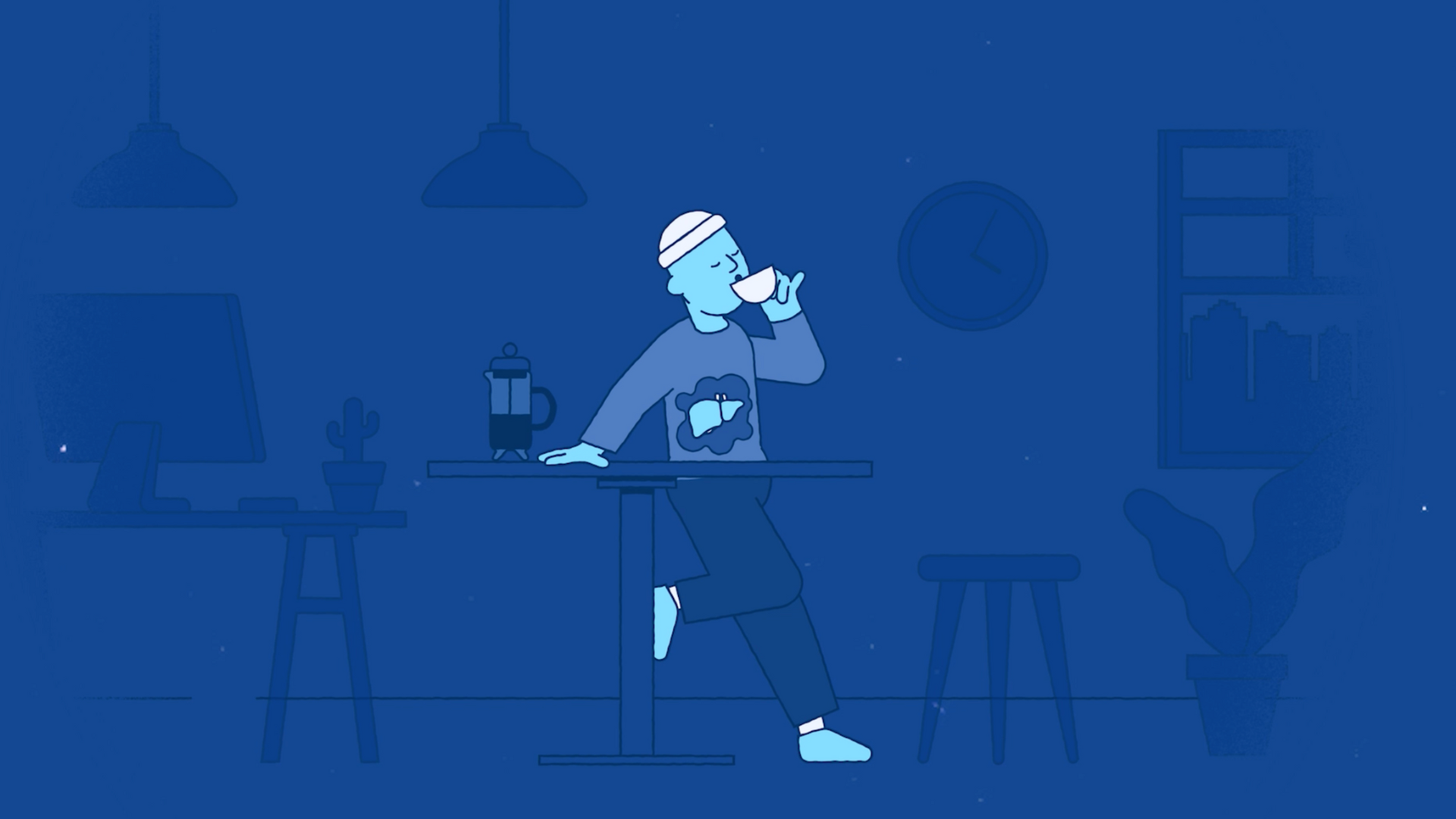
If coffee gives you the jitters or disturbs your sleep, it’s not your fault.
About half of all people have a gene variation that makes them metabolize caffeine more slowly than others—sometimes up to four times as long.
If you fall into this camp, you’re more likely to experience the not-so-great parts of caffeine. We founded Rarebird for this very reason. Despite a love of the coffee ritual, caffeine was driving higher stress levels, making me feel wired yet tired, and ultimately disrupting sleep. Sleep, as established by experts, is the foundation of our mental and physical health and performance in all endeavors.
The coffee gene:
Let's break this down a bit further. The CYP1A2 gene controls an enzyme, also called CYP1A2, that determines how quickly your body metabolizes (breaks down) caffeine*. There are three different variations of this gene, which will determine how quickly your body breaks down caffeine and influence how certain levels of caffeine may impact you.
AA Genotype: Two copies of the CYP1A2 gene:
- About 50% of individuals have two copies of this gene.
- 'Fast' caffeine metabolizers.
AC Genotype: One copy of the CYP1A2 gene:
- About 40% of individuals have one copy of this gene.
- 'Slow' caffeine metabolizers.
CC Genotype: No copies of the CYP1A2 gene
- About 10% of individuals have no copies of this gene.
- 'Ultraslow' caffeine metabolizers.

*Washington Post Source
What Does This Gene Mean for You?
The half-life of caffeine, i.e., how long it takes for half of the caffeine to be removed from your body, is anywhere from 2 to 8 hours depending on what CYP1A2 genotype you have.
If you have the AA genotype ('fast' metabolizer), it may take as little as 2 hours to remove half the caffeine from your system, giving you a higher tolerance to caffeine's stimulatory effects. In comparison, the CC genotype ('ultraslow' metabolizer) may take as long as 8 hours to remove half the caffeine from your system, making you more sensitive to caffeine's stimulatory effects.
If you've ever had sleep disrupted by caffeine, there's a good chance you have the AC or CC genotype, which ultimately makes caffeine's effects overstay their welcome.
Curious if You're a Fast or Slow Caffeine Metabolizer?
If you want to know which CYP1A2 genotype you have, you can verify through genetic testing services such as 23andMe.
Solving the Problem & Converting Caffeine into Px
Approximately 80% of the caffeine you consume is converted into Px (paraxanthine). While caffeine typically has an average half-life of 4 hours (which can vary widely), Px boasts a shorter average half-life of just 3 hours, as evidenced by comparative studies.
Until now, Px has solely existed in your body post-caffeine breakdown. Unfortunately, this doesn't allow you to experience Px's independent benefits such as smooth energy, reduced stress and uninterrupted sleep. We've taken the initiative to create a coffee with Px instead of caffeine, sidestepping typical caffeine-related side effects while preserving the familiar brewing process and taste integral to our daily rituals.
So, whether you're aiming for a more focused morning or an afternoon pick-me-up, Px Coffee is your go-to solution. Enjoy the benefits of Px without concerns about disrupting your day or night, regardless of your CYP1A2 genotype.




Share:
The Reason I Broke Up With Caffeine
What Is Px and How Does It Change Coffee as We Know It?